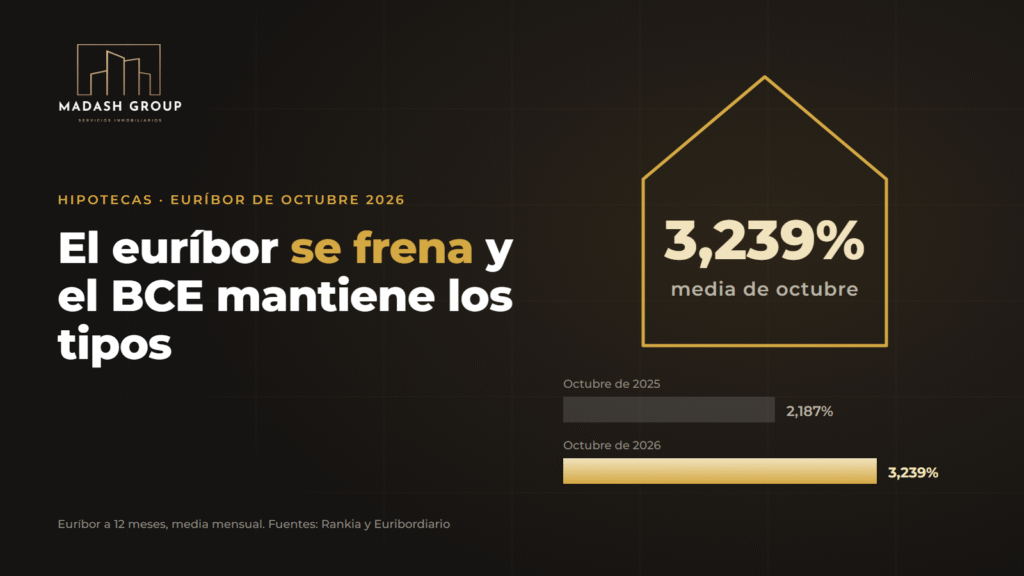
The 12-month Euribor, the index most variable-rate mortgages in Spain are linked to, closed September 2026 with a monthly average of around 3.25%. That is its highest level since July 2024 and more than one point above the 2.172% of September 2025. If you are thinking of buying or selling a home in Reus or Tarragona, this is what you need to know.
Why is the Euribor rising?
The trigger was the decision by the European Central Bank, which on 10 September raised interest rates by 25 basis points and set the deposit facility at 2.50%. The Euribor reflects the rate at which banks expect to lend to each other over the next year, so it reacts immediately to these moves: it went from an average of close to 2.95% in August to around 3.25% in September, and October has started even higher.
How much a variable mortgage goes up
Anyone with a variable mortgage reviewed annually around now will feel the full rise at once. As a rough example: on a €150,000 loan over 25 years with a margin of Euribor + 1%, the monthly payment would go from about €725 to about €813. That is around €88 more each month, just over €1,000 a year.
This is our own simplified calculation: the real figure depends on the outstanding capital, the remaining term and the margin in each contract. Fixed-rate mortgages do not change.
If you want to buy: fixed, mixed or variable
With the Euribor rising, new mortgages tend to become more expensive and banks adjust their offers. Before signing a deposit contract, it is worth being clear on three points:
- Ask for a pre-approval. Knowing how much the bank will lend you, and at what rate, avoids surprises once you have found the home.
- Compare fixed, mixed and variable rates. A variable rate usually starts cheaper but passes every Euribor rise on to your payments; a fixed rate gives you a stable payment for the whole life of the loan.
- Leave a margin. Also run the numbers with a rate somewhat higher than today's to check the payment is still comfortable.
If you want to sell: the asking price matters more
Prices are still rising in our area. According to Tinsa, finished homes in Reus became 12.99% more expensive year on year in the second quarter of 2026, reaching €1,616/m². But more expensive financing reduces what each buyer can pay: for the same monthly payment, the bank lends less.
In practice, this makes buyers compare more and negotiate more carefully. A home listed at a price in line with the market sells; one listed above it is more likely to sit unsold. We pointed this out when analysing the collapse of the housing decrees: getting the asking price right is more important than ever.
What is expected from now on?
Nobody can be sure where the Euribor will be a year from now. The forecasts compiled by the comparison site gibobs point to easing in the medium term: Funcas puts it at 2.54% and CaixaBank Research at 2.26% by the end of 2027. They are estimates, not guarantees, and in the short term the index remains at its highest level of the year.
What does this mean for you?
If you are going to buy, the sensible thing is to arrive at the negotiation with your financing worked out. If you are going to sell, what matters is knowing what price the market is willing to pay for your home today, not six months ago.
At MADASH GROUP we follow the Reus and Tarragona market closely. You can ask us for a free valuation of your home, browse the properties for sale or message us on WhatsApp.
Sources: gibobs (updated 1 October 2026) and euribor.com.es (26 September 2026); price data from Tinsa. The sources publish the September average with small differences (between 3.247% and 3.251%). This article is for information only and does not constitute financial advice.